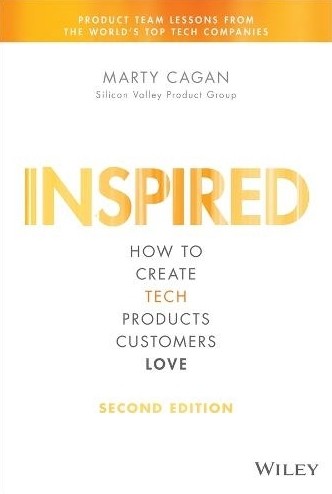
Inspired: How to Create Tech Products Customers Love
by Marty Cagan
Why This Book Hits Different
Most product books are either too tactical (here's how to write a PRD!) or too abstract (be customer-obsessed!). Cagan walks the line perfectly. He's opinionated, experienced, and ruthlessly practical.
If you've ever felt like you're just a roadmap manager shuffling Jira tickets, this book will either validate your frustration or make you realize why your company struggles to ship anything meaningful.
The Core Thesis: Feature Teams vs. Product Teams
This distinction is the entire book in one sentence:
Feature teams get handed a roadmap and build what they're told.
Product teams get handed problems and figure out the best solutions.
Most companies claim to have product teams. Most actually have feature teams with a Scrum veneer.
Why This Matters
I spent years as an engineer getting handed specs that made no sense. "Build this feature because the CEO wants it." No context, no user research, no success metrics. Just ship it.
When I moved into product, I initially just became the person writing those specs. Cagan's framework made me realize: I wasn't doing product management. I was doing project management with a fancier title.
The shift to real product thinking means:
- Outcomes over outputs
- Discovery before delivery
- Empowered teams over feature factories
Sounds obvious. Incredibly hard to execute.
Discovery: The Missing Half of Product Work
Cagan's big idea: Discovery is where you figure out what to build. Delivery is where you build it.
Most teams skip discovery entirely. They jump straight to solutions because:
- Stakeholders demand it ("just build the dashboard")
- Engineers want clarity ("tell me the spec")
- Discovery feels slow and uncertain
But here's the problem: building the wrong thing fast is worse than building the right thing slow.
The Four Big Risks (Discovery Framework)
Every product idea has four risks:
- Value risk : Will customers buy/use it?
- Usability risk : Can they figure out how to use it?
- Feasibility risk : Can we actually build it?
- Business viability risk : Does it work for our business?
Most teams only focus on feasibility. Engineers can build almost anything. The question is whether they should.
My take: The engineer-to-product transition is realizing that "can we build it?" is the least interesting question. I can architect a system that scales to 10M users. But if nobody wants the product, who cares?
Techniques That Actually Work
Cagan doesn't just philosophize. He gives you actual methods:
1. Opportunity Solution Trees
Map the opportunity space before jumping to features. Instead of "build a recommendation engine," ask:
- What problem are we solving?
- What outcomes do we want?
- What are the different ways we could solve this?
This forces you to think divergently before converging on a solution.
2. Prototyping for Learning, Not Validation
Don't prototype to prove your idea works. Prototype to discover where it breaks.
High-fidelity prototypes for usability. Low-fidelity prototypes for value. Feasibility prototypes (spikes, POCs) for technical risk.
Match the fidelity to the risk you're trying to reduce.
3. Reference Customers
If you're building B2B, get 6-8 reference customers before you build. Not beta testers. Not "they said they'd be interested." Actual companies willing to commit if you solve the problem well.
This is brutal but clarifying. Most ideas die here. That's the point.
The Product Trio: PM + Designer + Tech Lead
Cagan's model: the PM, designer, and tech lead work together from day one. Not sequentially (PM writes spec → designer mocks → engineer builds). Collaboratively.
Why Engineers Should Be in Discovery
As someone who came from engineering, this resonates hard.
When engineers only see specs, they:
- Build exactly what's specified (even if it's wrong)
- Miss better technical solutions
- Feel like code monkeys
When engineers are involved in discovery, they:
- Challenge assumptions ("why can't we solve this with a config change?")
- Propose feasible alternatives the PM didn't consider
- Actually give a shit about the outcome
Hot take: If your engineers don't understand why they're building something, you've already failed as a PM.
Where Cagan Gets It Right
1. Product Roadmaps Are Mostly Theater
Roadmaps are for stakeholder management, not product strategy. They create false certainty. "We'll ship feature X in Q3" sounds confident. It's also probably wrong.
Better: roadmap of problems you'll tackle, not features you'll ship.
2. Most "Validation" Is Confirmation Bias
User research where you show people your idea and ask if they like it is useless. People are polite. They'll say yes.
Real validation: show them a prototype and watch them fail. Ask them to pay for it. See if they actually use it.
3. Product Strategy ≠ Roadmap
Strategy is about focus. What are you not doing? What's your unfair advantage? What insights do you have that competitors don't?
A roadmap is just a list. Strategy is a theory about how to win.
Where I Disagree (Or at Least, Have Nuance)
1. The "Empowered Team" Ideal Is Hard at Scale
Cagan's model works great at companies like Netflix or Airbnb with strong product cultures and patient investors.
It's harder when:
- You're in a regulated industry (fintech, healthcare)
- You have legacy systems and tech debt
- Leadership doesn't trust teams to make big bets
- You're pre-PMF and need to move fast
Not saying it's impossible. Just saying you might need to adapt the model to your reality.
2. Discovery Can Become Analysis Paralysis
The book emphasizes rigor in discovery, which is great. But I've seen teams use "we're still in discovery" as an excuse to never ship.
At some point, you have to place a bet and learn from reality. Discovery de-risks. It doesn't eliminate risk.
What This Book Changed for Me
Before Inspired:
- Roadmap = backlog of features stakeholders want
- Success = shipped on time
- My job = write specs, manage timelines
After Inspired:
- Roadmap = portfolio of bets on problems worth solving
- Success = moved the metrics that matter
- My job = ensure we're solving the right problem before building anything
This mental shift is the difference between being a PM and being a project manager with delusions of looking impressive.
Who Should Read This
You should read this if:
- You're an engineer considering product management (this is the real job, not the ticket-shuffling version)
- You're a PM who feels like a glorified Jira admin
- You're a founder trying to build a product culture
- You're a designer who wants to understand how PMs should actually work
You can skip this if:
- You're already at a top-tier product company (you're probably already doing this)
- You need tactical execution advice (Cagan is strategic, not prescriptive)
Key Takeaways (The Stuff I Actually Use)
-
Start with the problem, not the solution. Seriously. Write down the problem statement before you ideate.
-
Involve engineers early. The best ideas come from the product trio, not the PM alone.
-
Test ideas before you build. Prototypes, customer interviews, fake door tests. Anything is cheaper than building the wrong thing.
-
Outcomes, not outputs. "We shipped 5 features" means nothing. "We increased activation by 15%" means something.
-
Kill bad ideas fast. Most ideas are bad. That's fine. The goal is to discover that before you waste 6 months building.
-
Product strategy is about saying no. If you're not killing ideas, you don't have a strategy.
Final Verdict
This book is the closest thing product management has to a bible. It won't teach you how to write user stories or run a sprint. It'll teach you how to think like a product person.
If you're serious about product, read it. Then read it again in six months. You'll catch things you missed the first time.
My Rating: 5/5
Essential. If you only read one product book, make it this one.
Enjoyed this review? Let's connect!
Follow on LinkedIn